Lavaux: the terraced vineyards of Lake Geneva
Thirty kilometres of dry-stone terraces between Lausanne and Vevey, worked since the eleventh century and listed by UNESCO since 2007.
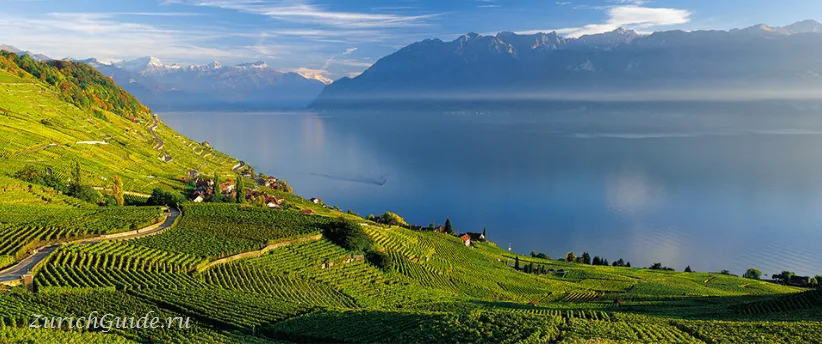
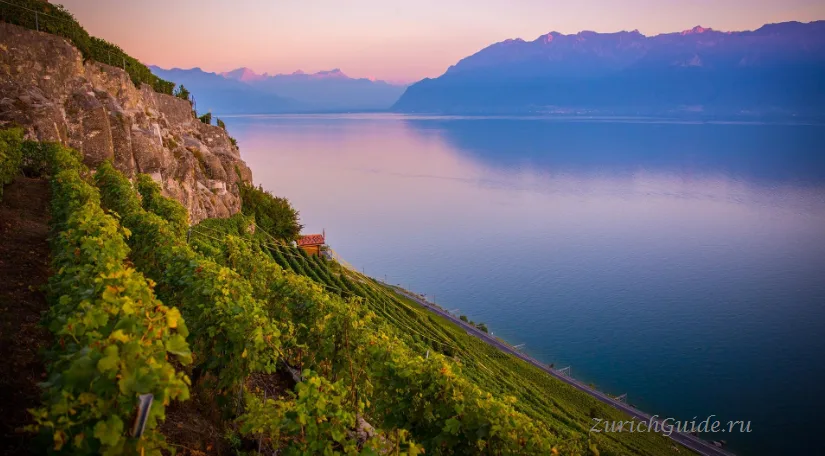
Lavaux is a 30 km strip of vineyard terraces on the north shore of Lake Geneva, running from the eastern edge of Lausanne to Vevey and the Château de Chillon. It covers about 830 hectares, which makes it the largest contiguous vineyard area in Switzerland, and since 2007 it has been on the UNESCO World Heritage list.
What UNESCO listed is not the wine but the landscape: eight centuries of dry-stone walls, built and rebuilt on a slope steep enough that much of the work is still done by hand.
Why the terraces exist
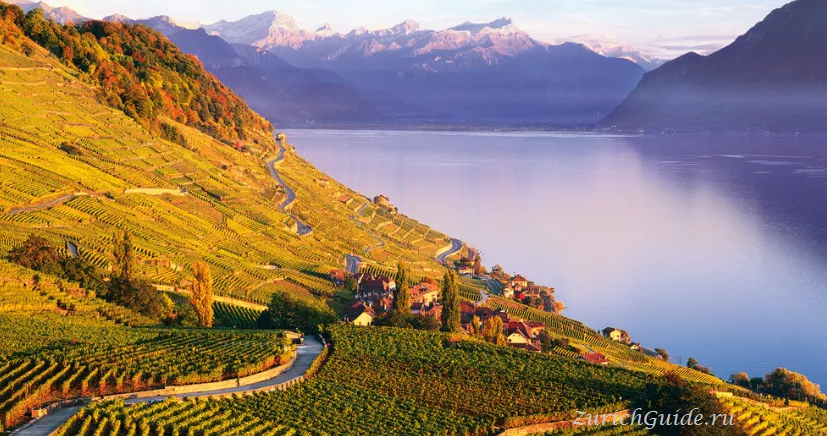
There were vines here in Roman times, but the terraces as they stand date from the eleventh century, when Benedictine and Cistercian monasteries controlled the slope and set about making it productive.
The engineering is the point. The vines get sun three times over — direct, reflected off the lake, and radiated back at night by the stone walls themselves. Local growers call it les trois soleils, the three suns. On a north-facing shore at this latitude, nothing would ripen without it.
The name has a quiet piece of grammar attached: French speakers say Lavaux without an article. It comes from Arpitan, the old Franco-Provençal of the region, in which la vau means valley; the final x was added to signal that the preceding vowel is pronounced. The same rule marks place names all over French-speaking Switzerland.
The region belonged to the bishops of Lausanne, then to Bern after the conquest, and was split and re-split into communes through the nineteenth century. Today all of it sits in the district of Lavaux-Oron.
The wine
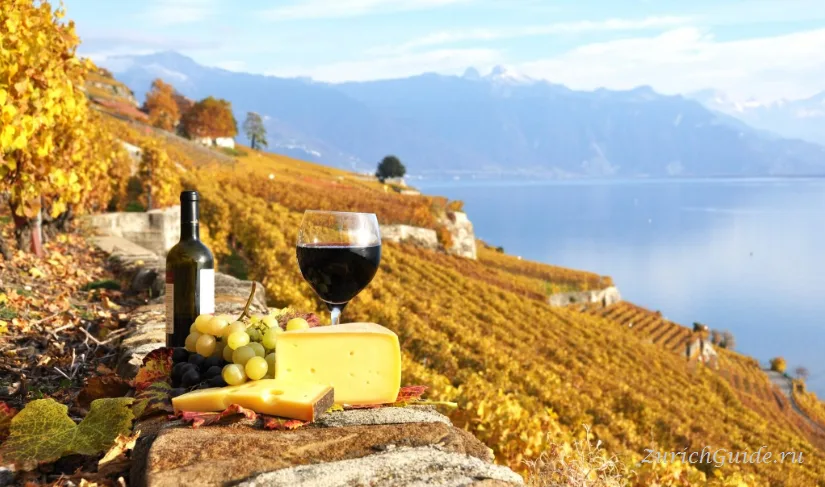
Lavaux produces about a fifth of the wine of the canton of Vaud. Roughly two thirds of the planting is Chasselas, with Gamay and Pinot Noir making up most of the rest.
Chasselas is the reason to pay attention. Almost nowhere else takes it seriously as a wine grape — it is a table grape in most of Europe — and Switzerland has spent centuries proving the exception. The wines are pale, low in aromatics, dry, with a stony, faintly saline character that reflects the site more than the fruit. They are drunk young, as an apéritif, and with lake fish and cheese.
A useful rule: if a Lavaux label names no grape variety, it is Chasselas.
Eight appellations carry their own name within AOC Lavaux — Calamin, Chardonne, Dézaley, Épesses, Lutry, St-Saphorin, Vevey-Montreux and Villette. Of these, Dézaley and Calamin are the Grands Crus and the ones worth seeking out.
The reds are Pinot Noir and Gamay, grown on the same slope and generally fruitier than their weight suggests.
Seeing the terraces
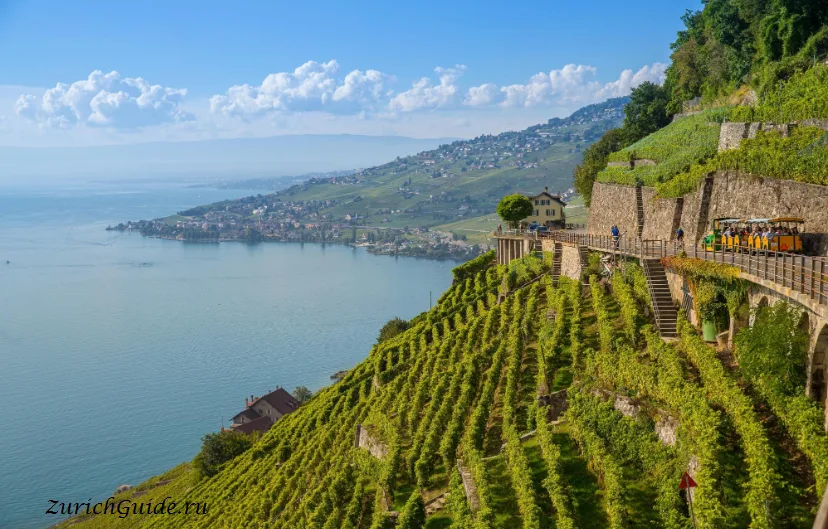
Four ways, in rough order of how much you will remember afterwards.
On foot. The best of them. A marked path runs the length of the terraces, mostly on the narrow tarmac service roads between the walls, with the lake below and the Savoy Alps across the water. The classic stretch is Lutry to St-Saphorin, about 11 km and three hours at an unhurried pace, with a train station at each end and several in between — so you can stop whenever you have had enough. Walking east to west keeps the sun behind you in the afternoon.
By train. The regional line along the shore runs through the bottom of the vineyards with stations at Lutry, Cully, Rivaz and St-Saphorin. It is an ordinary local service rather than a tourist one, which is part of the charm, and it makes the whole region reachable without a car.
By bicycle. Fine on the lower roads, hard work on the upper ones — the gradient is not decorative.
On the tourist train. A road train runs through the villages above Chexbres in season, with commentary, and takes under an hour. It suits anyone not up for the walk. Departures and fares change every year: check lavaux-panoramic.ch before going.
Tasting
Between roughly May and October, and mostly from Thursday to Sunday, the wine villages open their caveaux — cellars where growers pour their own wine by the glass. Some belong to associations of local producers on a rota, some to individual estates. Prices are modest and nobody expects you to be an expert.
A carnotzet is the smaller, rougher version: a cellar with benches and a long table, meant for staying put with wine, cheese and cured meat for the evening.
The tourist offices in Lutry, Cully, Chexbres, Vevey and Montreux hold the current opening rota, which is worth collecting on arrival — it changes week to week.
The villages themselves are the other reason to come: St-Saphorin in particular, a knot of stone lanes squeezed between the railway and the slope, with a church and one very old inn.
Eating
The region eats well and has done for a long time — several Michelin-starred kitchens sit within a few kilometres, along with the village auberges that have been feeding growers for generations. Lake perch (filets de perche), freshwater fish, and Vaud cheeses are the local repertoire, and everything is designed around Chasselas.
Star ratings and chefs change often enough that a list here would be wrong within a year; ask at the tourist office, or book the auberge in the village you happen to be standing in.
Getting there
Lavaux sits between Lausanne and Vevey, and both are on the main line from Geneva. Lausanne to Lutry is a few minutes by regional train; Vevey to St-Saphorin likewise. From Geneva airport the whole region is a little over an hour.
There is no need for a car, and on the upper roads — single track, stone walls on both sides, tractors — you will not enjoy having one.
When to go
September and October, for the harvest and the colour, are the best of it. May and June are green and quiet. The caveaux mostly close over winter, though the walk itself is fine year-round and the light in clear winter weather is exceptional.
Updated: