The Rhine Falls
The biggest waterfall in Europe by volume, close enough to Zurich to be a half-day trip, and free to look at.
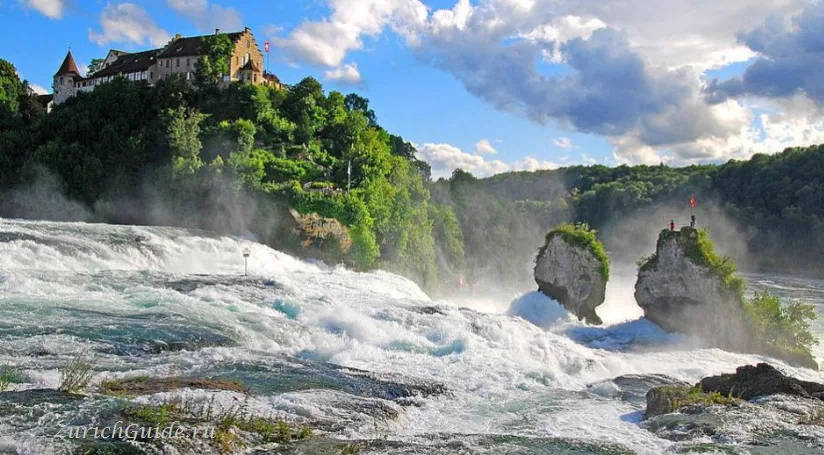
The Rhine Falls is the largest waterfall in Europe by volume — not by height, which is a modest 23 m, but by the sheer quantity of water going over: around 250 cubic metres a second in summer, and up to 600 in flood.
It is 150 m wide, it is loud, and it is 50 minutes from Zurich by train. That combination makes it the easiest big sight in Switzerland to reach, and the busiest.
The rock
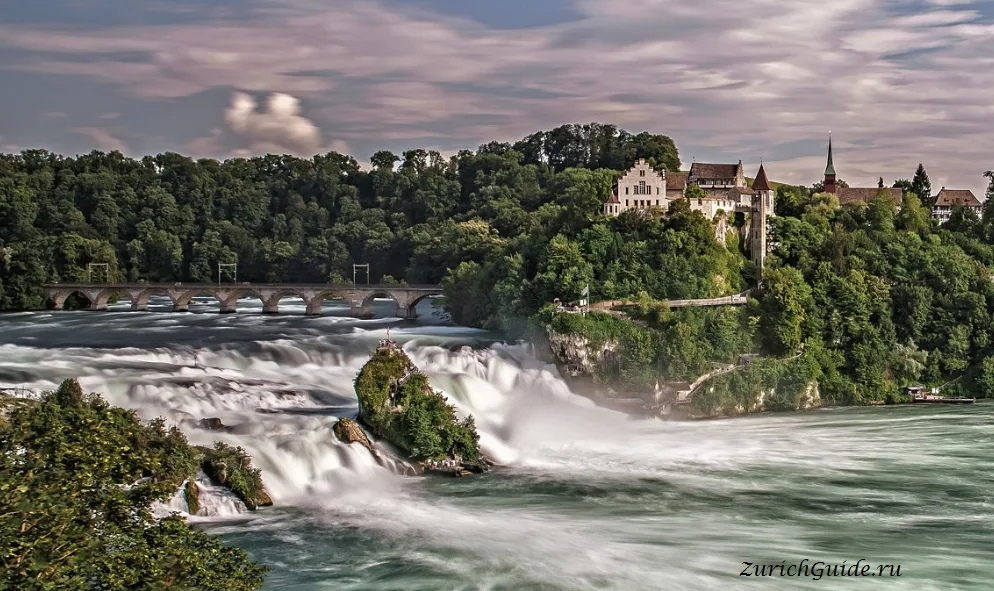
The falls’ distinguishing feature is the limestone stack standing in the middle of the torrent, which has resisted the river since the last ice age carved this channel some 15,000 years ago.
Boats run out to it, and you can climb it — steps cut into the rock lead to a small platform with a Swiss flag on it, in the middle of the falls, with the water going past on both sides. It is the single best thing here and it costs the price of the boat.
There are several boat routes at different prices: a short crossing, a round trip below the falls, and the one that lands at the rock. Take the rock.
Which bank
This is the one decision that matters, and the answer is: both, if you can.
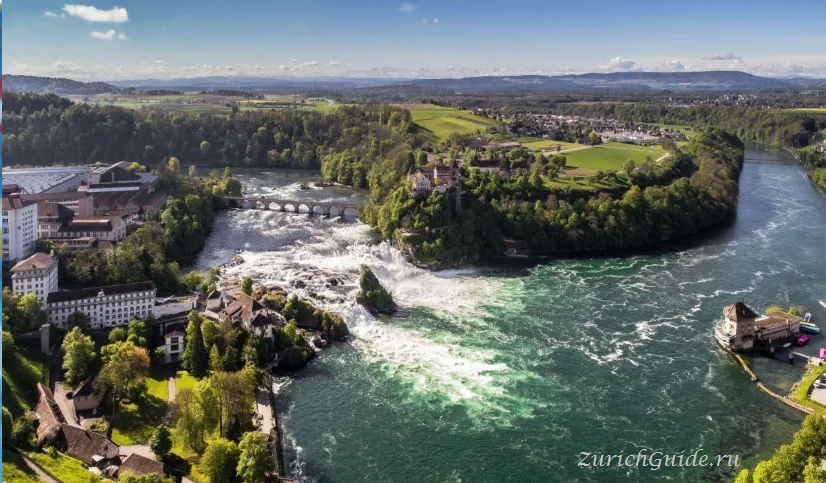
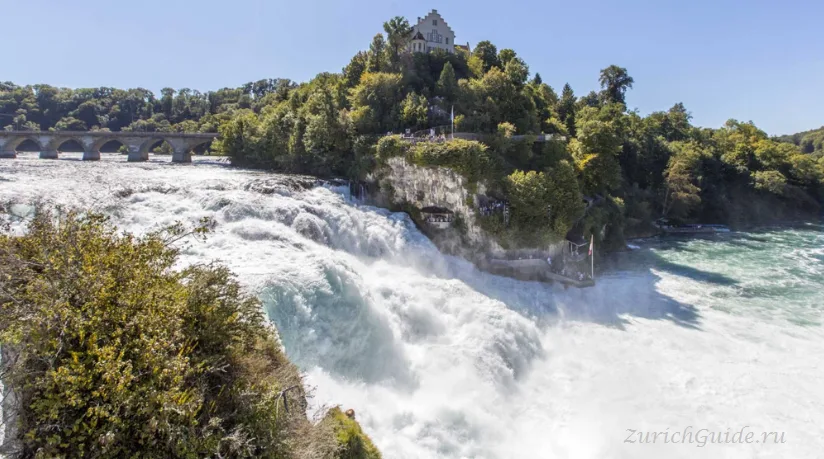
Schloss Laufen, on the southern bank (canton Zurich), is the classic approach. A castle on the cliff, a paid entrance, and a series of stepped walkways and platforms that take you down to the water — the lowest one, the Känzeli, puts you right at the edge of the falling water and you will get wet. There is a train station, Schloss Laufen am Rheinfall, in the grounds.
Schlössli Wörth, on the northern bank (canton Schaffhausen), is free. It has the boat pier, a restaurant on a spit of rock, and the wide view of the whole width of the falls — which is the better photograph.
A footbridge and the boats connect the two, so you can pay once and see both.
Getting there from Zurich
- By train — Zurich HB to Schloss Laufen am Rheinfall takes about 50 minutes with one change, and the station is inside the grounds. Alternatively go to Neuhausen Rheinfall for the northern bank, or to Schaffhausen and walk 30 minutes along the river.
- On a day pass — the whole trip is inside the standard fare network; a day ticket covering Zurich to Schaffhausen also covers the boats’ pier but not the boats themselves.
- By car — car parks on both banks, both paid, both full at midday in summer.
Half a day is enough. Combine it with Schaffhausen for a full one.
What it costs
Looking at the falls is free from the northern bank and from the paths around Neuhausen.
You pay for: the viewing platforms at Schloss Laufen, the boats, the lift down the cliff, and parking. None of it is expensive by Swiss standards, and the boat to the rock is the part worth paying for.
When to go
Water volume peaks in June and July, when the Alpine snow is melting — that is when the falls are at their most violent and the spray reaches the upper platforms. Winter is the low season for water: around a third of the summer flow, and a quieter, clearer sight.
Early morning or late afternoon for the crowds; the coach parties arrive from ten and thin out by four.
31 July, the eve of the Swiss national day, brings a large fireworks display over the falls.
Nearby
- Schaffhausen — 30 minutes’ walk or five by train: an old town with painted facades and the round Munot fortress, whose keeper still rings the bell at nine each evening
- Stein am Rhein — 20 minutes further, and the most decorated small town in Switzerland; see the ten most beautiful towns
- Winterthur — on the way back to Zurich, with a very good art museum
All three are on the same line, which makes a straightforward loop out of Zurich: falls in the morning, Stein am Rhein for lunch, home by evening.
Updated: