One day in Zurich
A route on foot from the station to the lake and back over the hill, timed to fit a day, with the two places worth paying for.
Zurich is small enough to do properly in a day and dense enough that a badly planned day misses most of it. This route walks a loop from the main station, and everything on it is within twenty minutes of everything else.
Total walking is around 5 km with the hill, or 3 km without. Nothing here needs a car and almost nothing needs a tram.
The short version
| 09:00 | Bahnhofstrasse, station to the lake |
| 10:00 | Fraumünster and the Chagall windows |
| 11:00 | Lindenhof and the west-bank lanes |
| 12:30 | Lunch in Niederdorf |
| 14:00 | Grossmünster and the tower climb |
| 15:30 | Boat on the lake, or the Kunsthaus if it rains |
| 17:30 | Uetliberg for the sunset |
Shift it an hour later in summer; the light lasts until nine.
Morning: down to the water
Start at Hauptbahnhof and walk the length of Bahnhofstrasse. It takes fifteen minutes, it is one of the most expensive shopping streets in the world, and you are walking it to arrive somewhere rather than to shop. The interesting shops are on the side streets; the banks are under your feet, in vaults.
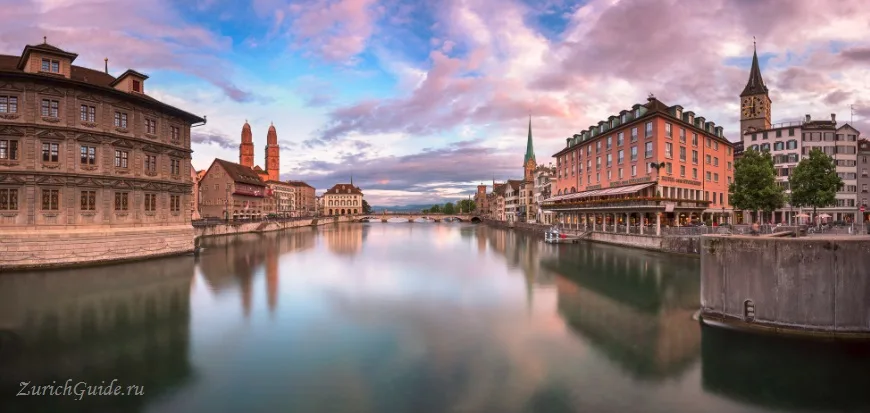
It ends at Bürkliplatz, where the lake begins. Turn and look back: this is the view that explains the city’s geography in one go — the water, the river leaving it, and the towers along the bank.
Fraumünster
Cross to the Fraumünster and go in. The five choir windows by Marc Chagall, glazed in 1970 when he was 83, are the single best thing in Zurich, and the rose window in the south transept is the Creation in seven petals.
Go before eleven if you can — the queue builds through the day, and there is no photography inside, which mercifully keeps it moving.
The Münsterhof square outside was the pig market for five centuries, then a car park, and is now neither.
Late morning: the west bank
Cross the Münsterbrücke — pause on it, the view up and down the Limmat is the postcard — then work back north through the lanes on the west side.
St. Peter hides in the alleys off Schlüsselgasse, and its clock face is the largest in Europe at 8.7 m. You navigate to it by looking up.
Above it, Lindenhof: a gravelled terrace under lime trees where the Romans put their customs post, with chess games in progress and the best free view in the city — the old town opposite, the towers, the lake, and the Alps closing the far end on a clear day.
Drop down the Schipfe on the river side: a lane of craft workshops under the hill, shaded and quiet even in July, and about the oldest working street in Zurich.
All three churches are covered in more detail in the churches of Zurich.
Lunch
Cross back to Niederdorf on the east bank — the pedestrian half, and where the food is. Anything on the lanes off Niederdorfstrasse.
Two Zurich dishes to know:
- Zürcher Geschnetzeltes — veal in a cream and white wine sauce, with rösti. The city’s own dish, and heavy enough that you will want the walk afterwards.
- Rösti on its own, which is what it sounds like and better than it sounds.
If you would rather spend the money on the afternoon: the food halls in the main station are genuinely good and open when everything else is shut.
Afternoon: the Grossmünster and the water
The Grossmünster’s twin towers are the symbol of the city, and this is where Zwingli launched the Swiss Reformation in the 1520s. Inside: a Romanesque crypt, choir windows by Augusto Giacometti, bronze doors by Otto Münch.
Then climb the tower. It is a modest fee and a lot of stairs, and the view over the roofs, the river and the lake is the one you will remember.
From the quay at Bürkliplatz, boats leave through the day. The short round trip takes about an hour and a half and is the cheapest way to see the city from the water — and if you hold a day transport pass, it is included, which surprises most visitors.
If it rains instead: the Kunsthaus is five minutes’ walk from the Grossmünster and holds the largest collection of Munch outside Norway, plus Giacometti and Hodler. Two hours there is not wasted.
Evening: Uetliberg
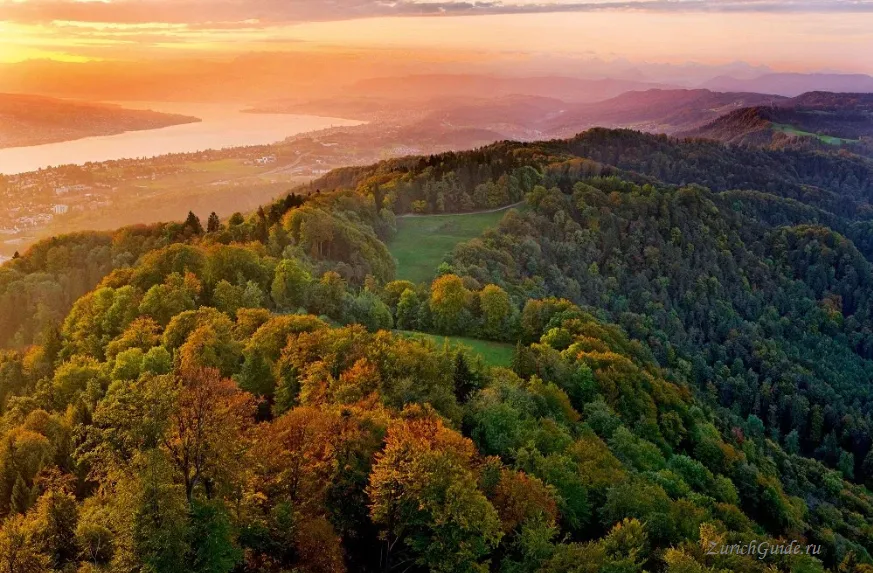
Take the S10 from the main station — about 25 minutes, on the normal city ticket — up to Uetliberg, the hill at 870 m on the western edge of town.
From the top the whole city lies below with the lake running away south-east and, on a clear evening, the Alps along the horizon. It is where Zurich goes to watch the sun set, and it costs nothing beyond the fare.
Come down the same way, or walk the ridge path north for an hour to Felsenegg and take the cable car.
If you have longer
- Add half a day for the lake swimming — the Badis are a few minutes from the banks and are the most Zurich thing there is
- Add a day for the Rhine Falls at 50 minutes, or Lucerne at 45
- Add an evening for Niederdorf after dark, which is a different place from Niederdorf at lunchtime
Practical notes
- You may not need a ticket at all. The whole route above is walkable except Uetliberg. If you are doing the boat and the hill, a 24-hour pass covers both and pays for itself.
- Ticket inspection is real and the fine is heavy. Nobody checks as you board, which catches visitors out constantly.
- Sunday: shops shut, museums open, and the station’s shops are the exception.
- Left luggage at the main station means you can do this whole route between two trains.
Updated: